

For this week’s essay I am donating all new subscriptions to the Food Education Fund, which supports young people entering hospitality. People who will, quite literally, feed the rest of us.
You can subscribe here:
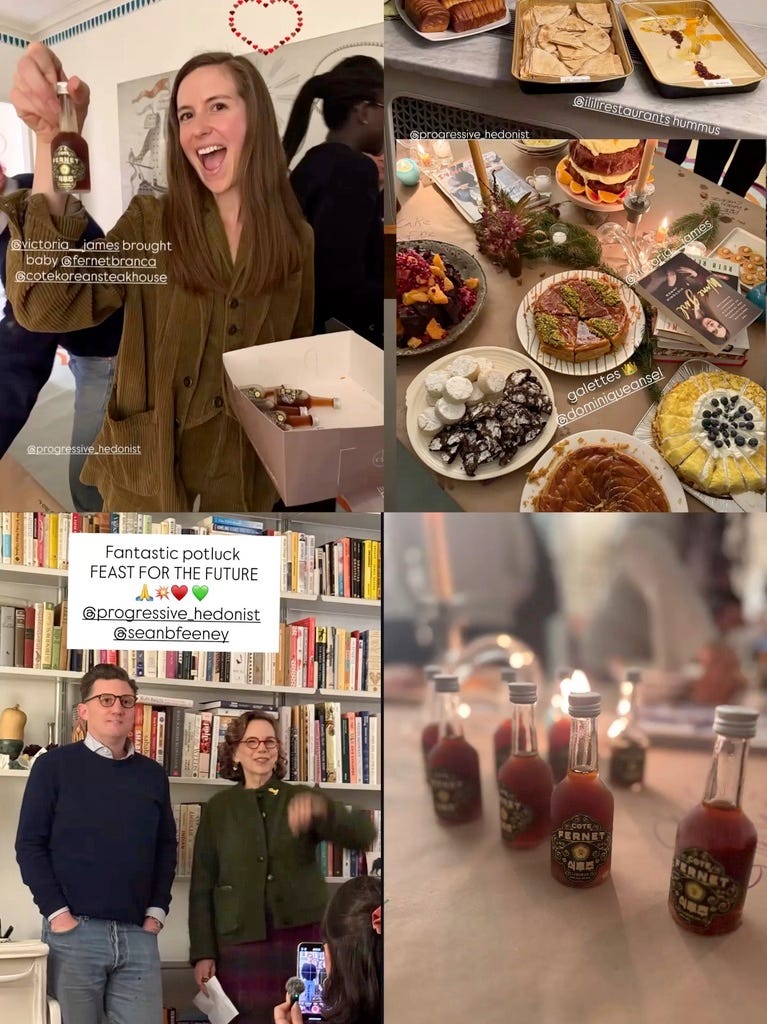
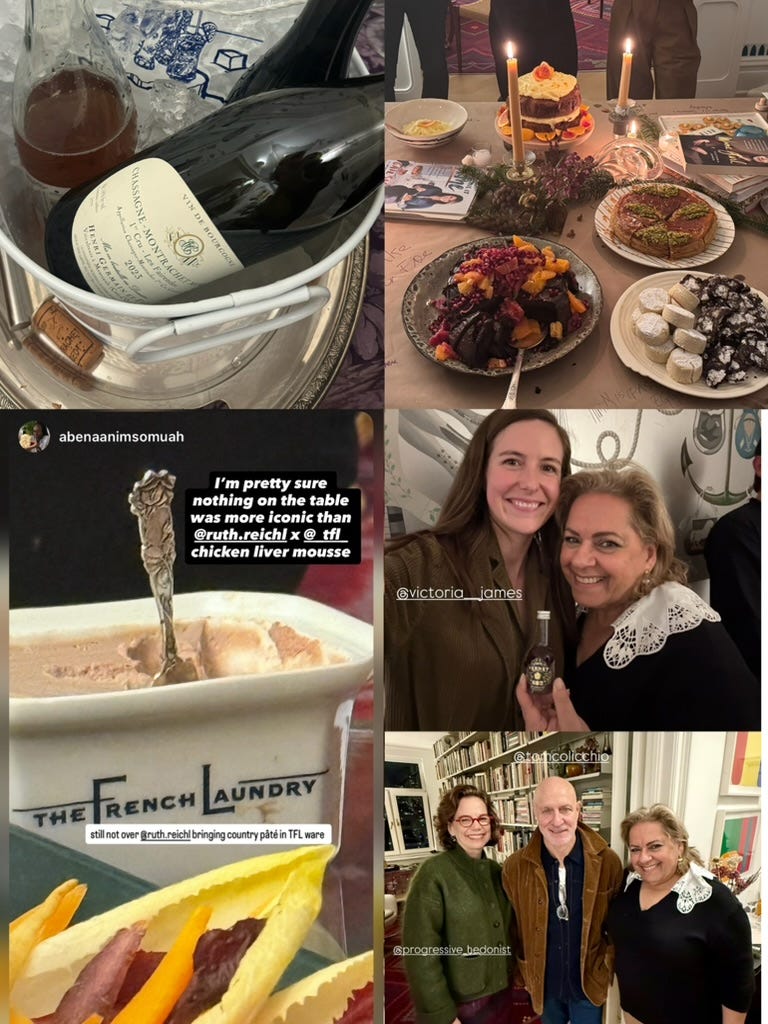
A mentor and friend of mine, Dana Cowin, hosted a potluck with a bunch of wine, restaurant, and food people this week. Dana runs Progressive Hedonist, where she gathers people around food that “nourishes ourselves and the planet, creates meaningful connections, deepens understanding, restores purpose, and inspires action.”
Usually, Potluck is a word that arrives pre-loaded with obligation, logistics, and the faint fear of being silently judged for bringing the wrong thing in the wrong vessel ( x10 if there are going to be famous chefs present).
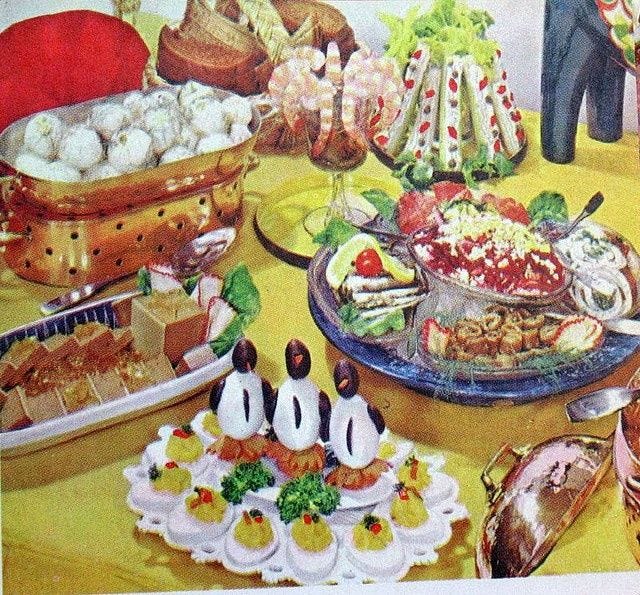
Potlucks, have historically had terrible PR. After I went, someone sent me Robby Hoffman’s Subway Takes video, in which she declares: “Either invite me for dinner or don’t but f*** your potluck.”
She’s very funny. The bit works. Her take - - that potlucks are what people do when they can’t really afford to host, and also that her move is about buying tabbouleh, transferring it to Tupperware, and pretending she made it, well, it is deeply relatable.
Twelve years ago, I once bought a chocolate cake for a dinner party I had promised to bake for. I then spent the afternoon “messing it up” just enough to look homemade. When someone asked what the filling was, I said I forgot. Which is not a thing anyone who has ever made a cake could plausibly say.
So yes. Robby’s take lands. But my take is actually the opposite: Today, more than ever before, I think we need more potlucks.
Social media has turned the dinner party into a kind of competitive hosting fetish: Look, she cooked twelve courses for forty people and still looks effortlessly TradWife hot. The potluck feels radical precisely because it refuses this. It says: we’ll do this together!
Which, historically, is exactly the point.
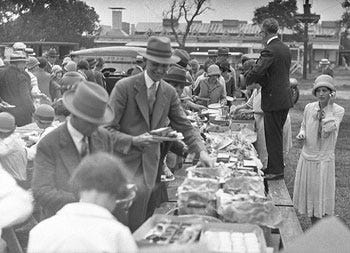
Unlike the dinner party or the cocktail party, the potluck is almost always tethered to the idea of community. That’s because it’s structurally egalitarian. It isn’t trying to be chic or cool. My earliest memories of potlucks are from weekly Bible study, when Suzy would arrive with her famous French onion dip. There is nothing sexy about transporting sour cream and onion powder in Tupperware across rural Virginia, well into the temperature danger zone after four hours out of the fridge- - but her dip slapped. It made me genuinely excited to see Suzy, who was otherwise pretty lame, mostly because she insisted on pinching my six-year-old cheeks.
In parts of the UK, a fuddle (my personal favorite) or Jacob’s join describes a gathering where everyone brings what they plan to eat, contributing it to a common stock. The root suggests a happy muddle—slightly chaotic, convivial, alive. Even the French pot-au-feu—a perpetual pot, always ready to receive whatever good fortune might bring—carries the same spirit.
The modern potluck isn’t a budget workaround. It’s a rejection of the old model, where one person performs hospitality for forty others while everyone else consumes.
That model is actually insane.
Truly.
A potluck takes the pressure off the host and redistributes it gently across the room. A community isn’t an audience. It’s a group of people pitching in, exchanging recipes, ideas. Even if you buy, and don’t bake, the cake.
FUDDLE THINGS UP, I say. For every dinner party you go to, throw in a couple of potlucks. Even us wine and restaurant people love them.
The potluck won’t kill the dinner party.
It might just save it.
If this essay resonated, consider subscribing. All new subscriptions will go directly to the Food Education Fund.
VJ’s Top Potluck Wines:
for paid subscribers…
